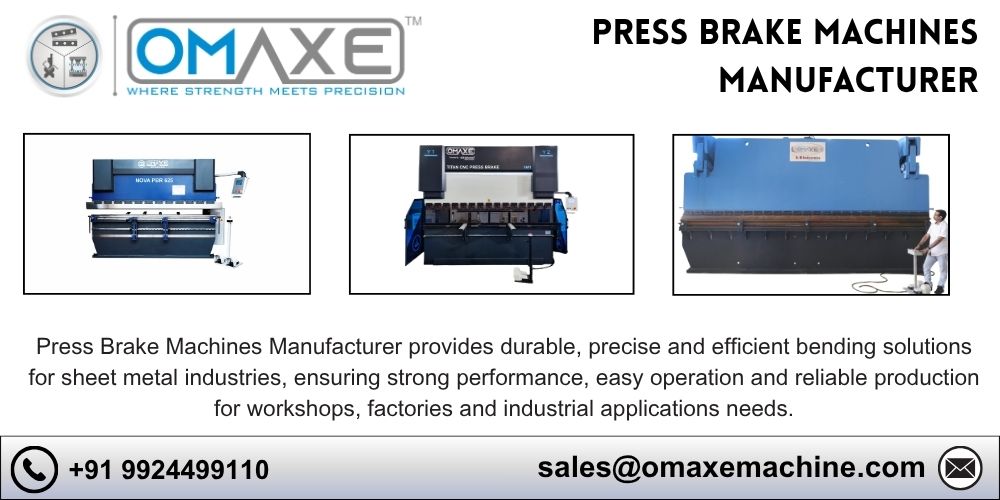
Press Brake Machines Manufacturer
Expert press brake machines manufacturer in Ahmedabad. Discover quality, precision, and reliable sheet metal fabrication solutions from Omaxe Machine India.
What are Press Brake Machines? An Overview
A press brake machine is a vital piece of metalworking equipment used to bend sheet metal and metal profiles into desired shapes. It operates by using a punch and die set to create a bend. The sheet metal is placed between the punch and the die, and the ram of the press brake descends, forcing the punch into the die, thereby bending the metal to the die's angle. Modern press brakes can be hydraulic, electro-hydraulic, or electric, offering varying degrees of control, speed, and precision.
Key Features and Technical Specifications
When evaluating press brake machines, several technical specifications are crucial for ensuring optimal performance and suitability for your applications. These include:
- Tonnage Capacity: The maximum force the machine can exert, determining the thickness and type of metal it can bend.
- Working Length: The maximum width of sheet metal that can be accommodated for bending.
- Throat Depth: The distance from the edge of the machine frame to the centerline of the tooling, affecting the size of parts that can be bent.
- Ram Speed: The speed at which the punch descends, impacting cycle time and precision.
- Accuracy: The repeatability and precision of the bend angle and depth.
- Control System: The type of controller (e.g., NC, CNC) that manages the machine's operations, offering varying levels of automation and programming capabilities.
- Tooling Compatibility: The ability to use standard or specialized punches and dies.
- Frame Rigidity: A robust frame minimizes deflection during bending, ensuring accurate and consistent results.
Industrial Applications and Use Cases
Press brake machines are versatile tools with applications across a wide spectrum of industries. Their ability to create precise bends makes them essential for:
- Automobile Industries: Manufacturing car body panels, chassis components, and interior trim parts.
- Metal Fabrication Industries: Producing custom metal enclosures, brackets, frames, and architectural elements.
- Construction Machinery: Fabricating structural components, housings, and specialized parts for heavy equipment.
- Electrical Equipment Industries: Creating control panels, electrical enclosures, switchgear components, and appliance casings.
- HVAC Systems: Bending ductwork, air handling units, and related components.
- Medical Equipment Industries: Manufacturing precise components for surgical instruments, diagnostic equipment, and hospital furniture.
- Kitchen Equipment Industries: Producing stainless steel countertops, cabinets, and appliance parts.
- Steel Furniture Industries: Bending components for office furniture, shelving units, and industrial storage solutions.
How to Choose the Right Press Brake Machine
Selecting the appropriate press brake machine involves a careful assessment of your specific operational needs. Consider the following checklist:
- Material Thickness and Type: Determine the maximum thickness and type of metal (e.g., mild steel, stainless steel, aluminum) you will be bending. This dictates the required tonnage.
- Part Complexity and Bend Requirements: Assess the types of bends, angles, and shapes you need to produce. CNC press brakes offer greater precision for complex jobs.
- Production Volume: For high-volume production, speed and automation are critical. Consider machines with faster ram speeds and advanced control systems.
- Available Space and Power: Ensure the machine's footprint and power requirements fit your facility.
- Tooling Needs: Verify if standard tooling will suffice or if custom tooling is required.
- Supplier Reputation and Support: Look for a manufacturer with a proven track record, strong quality control, and reliable after-sales service.
- Budget Considerations: Balance initial investment with long-term operational costs, including maintenance and potential downtime.
Quality Standards and Compliance
For any industrial machinery, adherence to recognized quality standards and compliance with relevant regulations is non-negotiable. Reputable manufacturers, such as Omaxe Machine India, typically build their machines to meet or exceed industry benchmarks. While specific certifications may vary, buyers should look for manufacturers who demonstrate a commitment to quality through rigorous internal testing and adherence to manufacturing best practices. This ensures the machine's durability, safety, and consistent performance.
Why Omaxe Machine India's Experience and Capability Matter
With over 25 years of experience in manufacturing hydraulic sheet metal machinery, Omaxe Machine India Pvt. Ltd. has cultivated deep expertise in delivering robust and precise press brake machines. Our manufacturing process is meticulously controlled, from raw material selection to final assembly, ensuring each machine meets stringent quality benchmarks. Our technical team possesses extensive knowledge in hydraulic systems and metal forming, enabling us to design and build machines that offer exceptional performance and reliability.
We pride ourselves on our ability to offer a wide range of machine models, catering to diverse industrial needs. Our commitment extends beyond manufacturing; we focus on providing comprehensive support, including timely delivery and responsive after-sales service. This dedication to quality, innovation, and customer satisfaction has established us as a trusted partner for businesses seeking high-performance press brake solutions in Ahmedabad and beyond.
Installation, Maintenance, and Care Tips
Proper installation, regular maintenance, and careful operation are key to maximizing the lifespan and performance of your press brake machine.
Installation
Ensure the machine is installed on a level, stable foundation capable of supporting its weight and operational forces. Proper electrical connections and hydraulic fluid levels are critical.
Routine Maintenance:
- Lubrication: Regularly lubricate all moving parts, including ram guides and pivot points, as per the manufacturer's recommendations.
- Hydraulic System: Check hydraulic fluid levels and condition. Filter or replace fluid as needed to prevent contamination. Inspect hoses and seals for leaks.
- Tooling: Inspect punches and dies for wear or damage. Damaged tooling can affect bend quality and potentially damage the machine.
- Electrical Components: Periodically check electrical connections for tightness and signs of wear.
- Cleaning: Keep the machine clean, free from debris and metal shavings, which can interfere with operation or cause damage.
Operational Care:
- Overloading: Never exceed the machine's rated tonnage capacity.
- Safe Operation: Ensure operators are fully trained on the machine's functions and safety procedures. Always use appropriate safety guards.
- Material Handling: Handle sheet metal carefully to avoid scratching or damaging the material or the machine's tooling.
Frequently Asked Questions
A press brake machine is designed to bend sheet metal and metal profiles into precise angles and shapes. It uses a punch and die system to create folds, enabling manufacturers to form complex components for various industrial applications.
NC (Numerical Control) press brakes offer basic automated control for depth and backgauge positioning, typically through pre-set programs. CNC (Computer Numerical Control) press brakes provide advanced computer-driven control, allowing for complex multi-axis programming, higher precision, and greater flexibility in bending operations.
Tonnage requirement depends on the material type, thickness, and the desired bend angle. You need to calculate the force required to bend your specific material. Manufacturers provide tonnage charts or can assist in calculating the appropriate capacity for your needs.
Common tooling includes punches (the upper tool that descends) and dies (the lower tool that forms the bend). These come in various shapes and sizes, such as acute angle punches, gooseneck punches, and V-dies, to achieve different bend profiles and accommodate various workpiece geometries.
Key maintenance includes regular checks and replenishment of hydraulic fluid, inspection of hydraulic hoses and seals for leaks, lubrication of moving parts, cleaning of the machine, and periodic inspection of electrical components and tooling for wear.
Yes, Omaxe Machine India has the engineering capability and experience to design and manufacture custom press brake machines tailored to specific client requirements, including unique specifications for tonnage, working length, or specialized applications.
Conclusion
For industries in Ahmedabad and across Gujarat requiring precision metal bending, selecting a reliable press brake machine manufacturer is paramount. Omaxe Machine India Pvt. Ltd. combines over two decades of manufacturing experience with a deep understanding of industrial needs to deliver high-quality, durable, and precise press brake machines. Our commitment to innovation, quality control, and customer support ensures that you receive machinery capable of enhancing your production efficiency and product quality. We invite you to explore our range of solutions and discover how our expertise can benefit your manufacturing operations.
Get In Touch
Omaxe Machine India Pvt. Ltd.