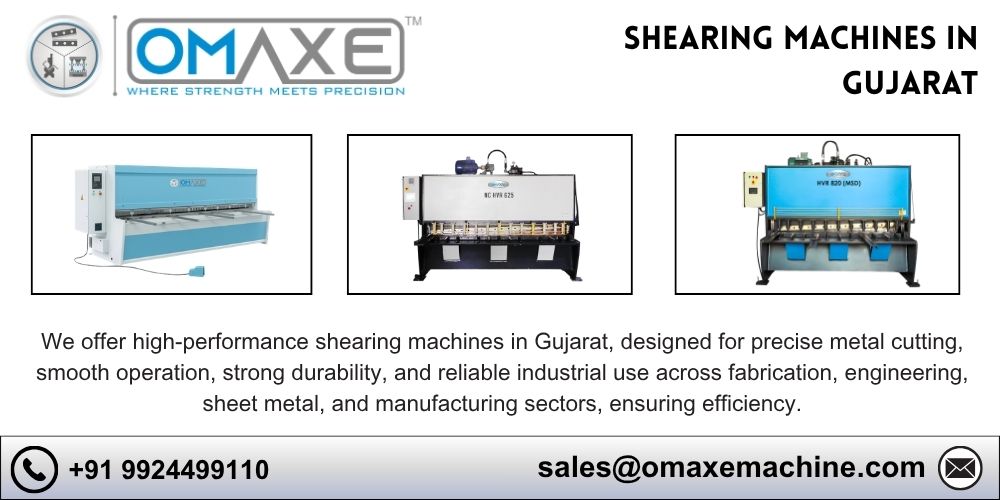
Shearing Machines in Gujarat
Find high-quality shearing machines in Gujarat. Omaxe Machine Tools offers reliable, precision-engineered solutions for all your metal fabrication needs.
What is a Shearing Machine? — Overview
A shearing machine, often referred to as a power shear or guillotine shear, is a piece of industrial equipment designed to cut sheet metal and plate into desired shapes and sizes. It operates by using a blade that moves vertically, or at an angle, against a stationary blade. The force applied by the upper blade, typically powered by hydraulic or mechanical systems, causes the metal to shear cleanly between the two blades. Modern machines offer various levels of automation, from manual operation to sophisticated CNC controls, allowing for high precision and repeatability in cutting operations.
Key Features and Technical Specifications
When evaluating shearing machines, several technical aspects are crucial for ensuring optimal performance and suitability for your specific applications:
- Cutting Capacity: The maximum thickness and length of metal the machine can shear.
- Blade Type and Material: High-quality steel blades designed for durability and clean cuts.
- Back Gauge System: Adjustable mechanism to control the depth of the cut, ensuring consistent piece sizes.
- Power Source: Hydraulic, mechanical, or electro-mechanical drive systems, each offering different operational characteristics.
- Control System: Manual, NC (Numerical Control), or CNC (Computer Numerical Control) for varying degrees of automation and precision.
- Throat Depth: The distance from the edge of the machine frame to the cutting line, affecting the size of pieces that can be processed.
- Angle of Blade: The rake angle of the upper blade, influencing the distortion and quality of the cut.
- Safety Features: Emergency stops, guarding, and interlocks to ensure operator safety.
Industrial Applications and Use Cases
Shearing machines are versatile tools with applications across a wide spectrum of industries:
- Automobile Manufacturing: Cutting body panels, chassis components, and interior parts.
- Metal Fabrication Shops: Preparing sheet metal for bending, welding, and assembly in custom projects.
- Construction Industry: Cutting structural steel, roofing sheets, and cladding materials.
- Electrical Equipment Manufacturing: Fabricating enclosures, panels, and components for electrical systems.
- HVAC Systems: Cutting sheet metal for ductwork, air handling units, and related components.
- Kitchen Equipment Production: Shaping stainless steel for appliances, countertops, and fixtures.
- Steel Furniture Manufacturing: Cutting metal sheets for frames, shelves, and decorative elements.
- Shipbuilding: Preparing large plates for hull construction and internal structures.
How to Choose the Right Shearing Machine
Selecting the appropriate shearing machine involves careful consideration of your operational needs and future requirements. Use this checklist to guide your decision:
- Material Type and Thickness: Determine the specific metals (mild steel, stainless steel, aluminum) and their maximum thicknesses you will be cutting.
- Required Precision and Automation: Assess whether manual control is sufficient or if NC/CNC automation is needed for complex shapes and high-volume production.
- Workpiece Size and Shape: Consider the typical dimensions of the parts you will be processing and the throat depth required.
- Production Volume: Evaluate the number of cuts per shift and the overall throughput needed.
- Budget and ROI: Balance initial investment with long-term operational costs and productivity gains.
- Supplier Reputation and Support: Research the manufacturer's track record, warranty, and availability of after-sales service.
- Safety Standards: Ensure the machine meets all relevant safety regulations and includes necessary protective features.
- Customization Options: Determine if the machine can be adapted to specific workflow requirements or unique applications.
Quality Standards and Compliance
For any industrial machinery, adherence to quality standards and compliance with regulations is non-negotiable. In India, and particularly for machinery used in critical applications, look for manufacturers who comply with national and international standards. This often includes certifications like ISO 9001 for quality management systems, ensuring consistent product quality and manufacturing processes. For electrical components, compliance with BIS (Bureau of Indian Standards) or IEC (International Electrotechnical Commission) standards is vital.
Reputable manufacturers will clearly state the standards their machines meet and can provide documentation to verify this. Verifying these aspects before purchase ensures you are investing in equipment that is not only reliable but also safe and compliant with industry requirements, minimizing risks and ensuring smooth operation.
Why Omaxe Machine India's Experience and Capability Matters
With over 25 years of experience in manufacturing, Omaxe Machine India Pvt. Ltd. has developed a deep understanding of the challenges and requirements of the metal fabrication industry. Our commitment to quality is evident in every aspect of our operations, from the selection of raw materials to the final inspection of each machine. We pride ourselves on our robust manufacturing processes, utilizing advanced techniques to produce durable and precise shearing machines.
Our team comprises experienced engineers and technicians dedicated to innovation and customer satisfaction. This technical capability allows us to offer a wide range of machine models and also to provide customized solutions tailored to specific client needs. Rigorous quality control measures are implemented at every stage of production to eliminate potential errors. Furthermore, our focus on timely delivery and reliable after-sales support ensures that our customers in Gujarat and beyond receive not just a machine, but a complete, dependable solution.
Installation, Maintenance, and Care Tips
Proper installation, regular maintenance, and careful operation are key to maximizing the lifespan and performance of your shearing machine.
- Installation: Ensure the machine is installed on a level, stable foundation. Connect power and hydraulic systems according to the manufacturer's specifications. Allow for adequate clearance around the machine for operation and maintenance.
- Routine Checks: Before each shift, visually inspect the machine for any loose parts, leaks, or unusual noises. Check the lubrication levels.
- Blade Maintenance: Keep the shear blades sharp and properly aligned. Dull blades can lead to poor cut quality and increased stress on the machine. Schedule regular blade sharpening or replacement based on usage.
- Lubrication: Follow the manufacturer's recommended lubrication schedule for all moving parts, hydraulic systems, and bearings.
- Cleaning: Keep the machine clean, especially the cutting area and control panel, to prevent debris from interfering with operation.
- Operator Training: Ensure all operators are thoroughly trained on the machine's functions, safety procedures, and maintenance requirements.
- Hydraulic System Care: For hydraulic machines, monitor fluid levels and quality. Contaminated or low fluid can damage the hydraulic pump and cylinders.
Frequently Asked Questions
A shearing machine is designed to cut sheet metal and plates into precise dimensions. It utilizes a powerful shearing action between two blades to achieve clean and accurate cuts, making it essential for preparing materials for various fabrication processes.
Shearing machines are capable of cutting a range of metals, including mild steel, stainless steel, aluminum, and brass. The specific capacity and type of metal depend on the machine's specifications, such as its cutting capacity and blade material.
To determine the correct cutting capacity, you must identify the maximum thickness and length of the metal sheets you will be processing regularly. It is advisable to choose a machine with a capacity slightly above your typical requirements to ensure optimal performance and longevity.
Hydraulic shearing machines use hydraulic power to drive the cutting blade, offering smoother operation, variable stroke control, and often higher capacities. Mechanical shears use a flywheel and clutch system, typically faster but with less stroke control and potentially higher maintenance.
The frequency of blade sharpening or replacement depends heavily on the material being cut, the thickness, and the volume of work. For general use, blades may need attention every few months, while for heavy-duty applications, more frequent servicing might be necessary.
Essential safety features include emergency stop buttons, blade guards, safety interlocks that prevent operation when guards are open, and a stable base to prevent tipping. Proper operator training is also a critical safety component.
Conclusion
For industries in Gujarat requiring precise and efficient metal cutting, investing in a quality shearing machine is a strategic decision. Understanding the technical specifications, application suitability, and the importance of reliable manufacturing partners like Omaxe Machine India Pvt. Ltd. is crucial. By focusing on capacity, control systems, blade quality, and the manufacturer's experience, businesses can select equipment that enhances productivity, ensures accuracy, and supports long-term operational success.
Get In Touch
Omaxe Machine India Pvt. Ltd.